An automated call center is one of the fastest ways to improve customer experience, control costs, and scale your support operations without sacrificing quality. Leveraging AI-driven solutions, it enables businesses to handle more calls efficiently while maintaining a consistent service standard. With the rise of Omnichannel support trends for contact centers, integrating Contact Center AI in omnichannel engagement ensures your customers enjoy seamless interactions across voice, chat, email, and social channels.
This guide walks you through what an automated call center is, how it works, the biggest benefits, and what to look for when you are ready to implement or upgrade your own solution.
Modern contact centers are evolving into highly intelligent operations that combine multiple communication channels with advanced computing capabilities. Leveraging emerging distributed computing technologies that enhance call routing efficiency allows businesses to process large volumes of customer requests without delay. Similarly, implementing high-performance computing systems designed to accelerate data analysis in customer service ensures that AI-powered solutions can make real-time decisions, improving both speed and accuracy.
In addition to technology, understanding financial management is critical for optimizing operations. Using comprehensive financial planning strategies for investing in AI-driven contact centers helps organizations allocate resources effectively while scaling automated services. Proper budgeting ensures that adopting new tools enhances customer support without overspending.
Marketing and customer engagement also play an essential role in modern call centers. Insights from long-form online marketing analytics strategies to improve multichannel customer engagement provide actionable guidance for tailoring communications based on user behavior. Combining these approaches with data-driven digital marketing methods to increase conversion and satisfaction allows contact centers to deliver a more personalized and consistent customer experience across all platforms.
By integrating advanced technology, smart financial planning, and strategic marketing insights, businesses can maximize the potential of their automated call center, ensuring smoother operations, faster response times, and higher overall customer satisfaction.
Top 10 Automated Call Center Solutions for Modern Businesses
Choosing the right automated call center solution can dramatically improve customer experience, reduce operational costs, and streamline support across multiple channels. Here’s a curated list of the top providers, starting with Bright Pattern.
1. Bright Pattern – AI-Powered Contact Center Solution
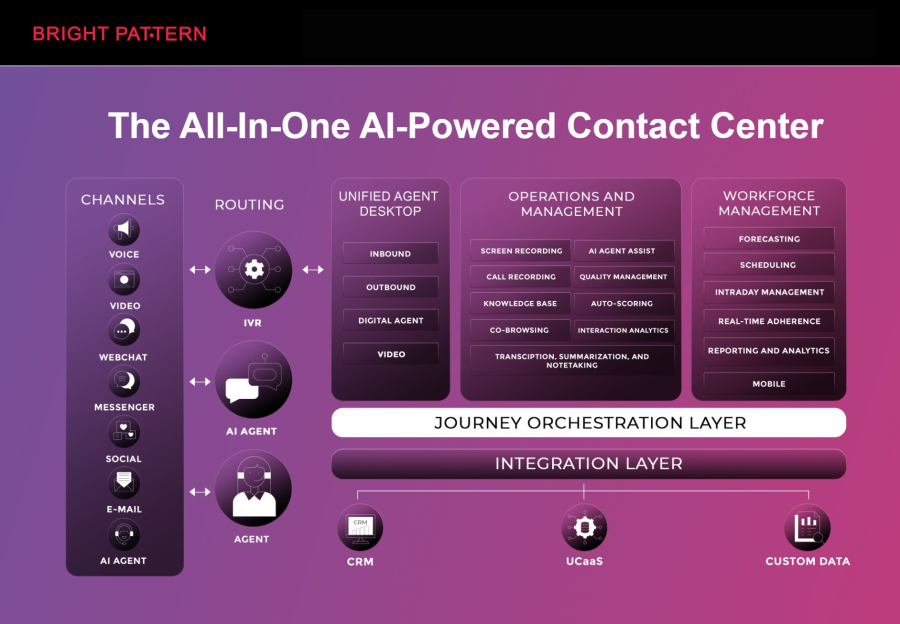
Bright Pattern is a leading provider of AI-driven contact center software that enables businesses to automate and streamline customer interactions across voice, chat, email, and messaging platforms. Its solution is designed to handle high call volumes efficiently while maintaining a consistent, personalized experience for every customer.
Key features include:
- Intelligent call routing to the most suitable agent
- AI-powered chatbots for faster responses
- Real-time analytics for monitoring agent performance
- Integration with CRM and marketing platforms
- Omnichannel support for seamless customer engagement
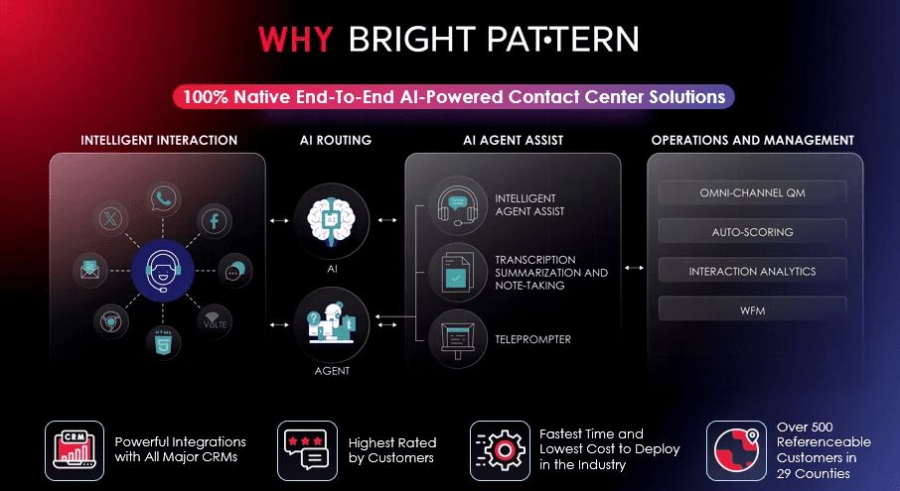
With Bright Pattern, businesses can scale operations without sacrificing quality, making it one of the most robust automated call center solutions available today.
2. Five9 – Cloud-Based Contact Center Software
Five9 provides cloud contact center solutions with AI and automation features designed to enhance productivity. Its capabilities include predictive dialing, virtual assistants, and analytics dashboards for monitoring performance.
3. Genesys Cloud CX – Omnichannel Contact Center
Genesys Cloud CX delivers AI-powered omnichannel solutions that unify voice, chat, and social media interactions. Its automation features help optimize call handling and agent workflow.
4. NICE inContact – Intelligent Customer Engagement
NICE inContact offers cloud-based contact center solutions with advanced AI routing, workforce management, and real-time insights, enabling faster response times and improved customer satisfaction.
5. Talkdesk – AI-Enhanced Call Center Platform
Talkdesk provides a platform that combines AI automation with real-time analytics, empowering contact centers to reduce call wait times and enhance agent productivity.
6. 8x8 Contact Center – Cloud Communication Solutions
8x8 offers automated call center tools with AI features that streamline communication, reduce operational bottlenecks, and provide insights into customer interactions.
7. RingCentral Contact Center – Integrated AI and Automation
RingCentral’s platform leverages AI for intelligent routing, automated workflows, and enhanced reporting, supporting both inbound and outbound communication efficiently.
8. Avaya OneCloud – Enterprise Contact Center Solution
Avaya OneCloud provides a cloud-based solution with AI-driven automation, speech analytics, and workforce optimization to improve customer service operations.
9. Cisco Contact Center – Unified Communication Tools
Cisco offers AI-enabled contact center software that integrates multiple channels, automates routine tasks, and provides detailed analytics for performance improvement.
10. Zendesk Talk – Customer Support Automation
Zendesk Talk is designed for smaller and mid-sized businesses, offering automated call handling, integration with CRM systems, and AI-based tools to enhance customer support efficiency
What Is an Automated Call Center?
An automated call center is a customer service system where software, artificial intelligence, and pre‑defined workflows handle a large portion of call handling tasks that used to require a human agent. Instead of every call going directly to a live person, automation takes care of routine interactions and intelligently passes more complex issues to your team.
Automation can support every stage of the customer journey, including:
- Answering and greeting incoming calls.
- Identifying the caller and their intent.
- Routing calls to the right department or agent.
- Handling simple requests (like balance checks or order status) without an agent.
- Triggering callbacks when queues are busy.
- Collecting feedback after a call ends.
The result is a more efficient, predictable, and scalable support system that can run 24/7 while keeping your team focused on the interactions that matter most.
How an Automated Call Center Works
While specific setups vary, most automated call centers follow a similar flow from the moment a customer dials your number.
1. Call Reception and Greeting
When a customer calls, an automated system answers within a few rings. A professionally recorded greeting or text‑to‑speech message welcomes the caller and presents high‑level options such as sales, support, or billing.
This greeting is usually managed by aninteractive voice response(IVR) system, which can accept keypad inputs or spoken responses like “technical support” or “account information.”
2. Caller Identification and Data Lookup
Behind the scenes, the system can identify the caller by:
- Matching their phone number to a customer record.
- Asking for an account or order number.
- Authenticating with a PIN or other verification data.
Once identified, the call center software can pull relevant data, such as customer status, recent orders, or open support tickets. This information helps tailor the next steps.
3. Menu Navigation and Self‑Service
The IVR menu guides callers through a set of options. A well‑designed menu is short, clear, and focused on the most common tasks. For example, callers may be able to:
- Check an order or delivery status.
- Pay a bill or update payment details.
- Reset a password or unlock an account.
- Get store hours or basic information.
Many of these requests can be completed entirely through automation, with no agent involvement. This is where businesses see a major gain in efficiency and speed.
4. Intelligent Call Routing
If a caller needs human help, the automated call center routes the call intelligently based on rules you set. This can include:
- Skills‑based routingto send calls to agents with specific expertise or language skills.
- Priority routingfor VIP customers or high‑value accounts.
- Time‑based routingto adjust destinations based on working hours or time zones.
- Data‑driven routingbased on information from your CRM, helpdesk, or billing system.
Because callers are matched to the right resource from the start, you reduce transfers, shorten call times, and improve satisfaction.
5. Agent Assist and Automation During Live Calls
Automation does not stop once a caller reaches an agent. Advanced automated call centers also provideagent assistfeatures such as:
- Automatically pulling up the customer record when a call connects.
- Displaying suggested responses or next steps in real time.
- Surface relevant knowledge base articles as the conversation unfolds.
- Auto‑logging call details into your CRM or ticketing tool.
This minimizes manual work for agents and ensures customer information stays complete and accurate.
6. Post‑Call Automation and Analytics
After each call, the automated system can trigger helpful follow‑up actions such as:
- Sending a confirmation or summary message.
- Inviting customers to complete a short satisfaction survey.
- Updating open tickets or workflows based on call outcomes.
- Feeding data into analytics dashboards and reports.
Over time, these data points help you refine your menus, staffing, training, and overall customer experience strategy.
Core Features of an Automated Call Center
Modern solutions bundle several powerful features that work together to streamline operations and elevate service quality.
Interactive Voice Response (IVR)
IVR is the foundation of most automated call centers. It provides the voice menus and logic that guide callers to the best outcome. Key advantages include:
- Handling high call volumes without long wait times.
- Allowing customers to self‑serve for common tasks.
- Consistent, branded greetings and messaging.
- Flexible configuration so you can easily add or adjust menu options.
Automatic Call Distribution (ACD)
Automatic call distributionassigns incoming calls to available agents based on your rules. Combined with IVR, ACD ensures that callers land in the right queue with minimal friction.
AI‑Powered Routing and Virtual Agents
Artificial intelligence can enhance automation with:
- Natural language understandingso customers can speak in their own words instead of pressing buttons.
- Virtual agents(voicebots) that can handle more sophisticated conversations.
- Predictive routingthat matches callers to the agent most likely to resolve their issue quickly.
These capabilities make automated interactions feel more natural and human‑like, while still delivering the speed and scale of automation.
Callbacks and Queue Management
To avoid frustrating hold times during busy periods, automated call centers can offer:
- Callback optionswhere customers keep their place in line without staying on the phone.
- Estimated wait timesso callers know what to expect.
- Smart queueingthat shifts calls between teams or channels as capacity changes.
These simple features can significantly improve the perceived quality of your service.
Omnichannel Integration
Many automated call centers connect voice with other channels such as chat, email, and messaging. This allows you to:
- Offer consistent service across channels.
- Let customers move from self‑service to live support smoothly.
- Give agents a full view of the customer journey, not just the current call.
Reporting and Analytics
Robust reporting is a major strength of automated call centers. Useful metrics often include:
- Call volume by hour, day, campaign, or queue.
- Average wait time and abandonment rate.
- First‑call resolution rate.
- Self‑service completion rate in the IVR.
- Agent productivity and occupancy.
With this data, you can continuously optimize menus, staffing, and workflows for better performance and customer satisfaction.
Key Benefits of an Automated Call Center
Businesses adopt automated call centers because they deliver meaningful, measurable results. Here are the biggest advantages.
1. Lower Operational Costs
Automation reduces the number of repetitive tasks your agents must handle manually. By allowing customers to self‑serve for common requests, you can:
- Handle more interactions without increasing headcount.
- Reduce overtime and staffing pressure during peak periods.
- Standardize processes and minimize costly errors.
In many organizations, this translates directly into a lower cost per contact.
2. 24/7 Availability
Customers increasingly expect support outside of traditional working hours. An automated call center makes this possible by providing:
- Round‑the‑clock access to self‑service options.
- After‑hours routing to on‑call teams or overflow providers.
- Consistent handling of time‑sensitive requests, even overnight or on weekends.
You can serve customers in different time zones and reduce the frustration that comes with limited service windows.
3. Faster Response Times
Because automation can handle a large portion of calls instantly, customers spend less time waiting in queues. Even when an agent is required, intelligent routing and pre‑call data collection shorten the overall interaction.
This speed is especially valuable in situations where quick answers are critical, such as financial services, healthcare, or urgent technical support.
4. Better Customer Experience
Done right, automation actually makes support more personal and convenient. Customers appreciate:
- Getting quick answers to simple questions without explaining their issue multiple times.
- Reaching the right person the first time, without multiple transfers.
- Consistent service quality, regardless of time of day or agent availability.
When automation takes care of routine tasks, agents can devote more time and attention to complex, high‑value conversations that build loyalty.
5. Higher Agent Productivity and Morale
Agents often feel more engaged when they focus on meaningful work instead of repetitive, low‑impact calls. An automated call center supports them by:
- Reducing repetitive questions and manual data entry.
- Providing context about the customer and their issue before the call begins.
- Automating post‑call wrap‑up tasks wherever possible.
This leads to less burnout, more satisfying work, and improved performance.
6. Consistency and Compliance
Automation helps ensure that your processes are followed correctly every time. You can:
- Standardize greetings, disclosures, and required scripts.
- Prompt agents to ask necessary questions or capture key data.
- Track and document interactions for audit and quality purposes.
This is especially important in regulated industries where consistent communication and documentation are essential.
7. Scalable Growth
As your business grows, call volumes naturally increase. An automated call center scales more easily than a purely manual setup because you can:
- Add new menus, queues, or campaigns quickly.
- Route seasonal or promotional surges intelligently.
- Expand to new regions or time zones without rebuilding from scratch.
This scalability helps you support growth while staying in control of costs and service quality.
Popular Use Cases for Automated Call Centers
Automation delivers value across many sectors. Here are some common scenarios where it shines.
Customer Service and Technical Support
Support teams use automation to:
- Provide troubleshooting steps for frequent issues.
- Route calls based on product, plan, or customer tier.
- Automate ticket creation and updates.
Sales and Lead Management
Sales organizations use automated call centers to:
- Qualify inbound leads before connecting them with a salesperson.
- Distribute calls evenly across teams or territories.
- Support outbound campaigns and follow‑ups.
Billing and Collections
Finance and billing teams rely on automation to:
- Enable self‑service bill payments and balance checks.
- Send reminders or connect customers to the right collections agent.
- Ensure consistent, compliant language in sensitive conversations.
Healthcare and Appointment Management
In healthcare and professional services, automated call centers can:
- Confirm, reschedule, or cancel appointments.
- Provide directions, hours, or preparation instructions.
- Route urgent calls to on‑call staff or emergency lines.
Retail and E‑Commerce
Retailers and online stores see benefits when they use automation to:
- Handle order tracking and delivery status requests.
- Support returns and exchanges with clear guidance.
- Connect high‑value customers to dedicated support lines.
Choosing the Right Automated Call Center Solution
When you are evaluating providers or planning an upgrade, it helps to compare options systematically. The table below outlines key decision areas to consider.
|
Decision Area |
What to Look For |
|
Scalability |
Ability to handle current and future call volumes, add new numbers or queues quickly. |
|
IVR Flexibility |
Easy configuration of menus, prompts, and call flows without heavy development work. |
|
Routing Intelligence |
Support for skills‑based, priority, and data‑driven routing strategies. |
|
AI Capabilities |
Natural language understanding, virtual agents, and real‑time agent assist features. |
|
Integrations |
Native or open integrations with CRM, helpdesk, billing, and analytics tools. |
|
Reporting |
Granular, real‑time analytics with customizable dashboards and export options. |
|
Reliability |
High uptime, redundancy, and robust call quality monitoring. |
|
Security |
Strong data protection practices and alignment with relevant regulations. |
|
User Experience |
Intuitive admin interfaces and positive feedback from agents and supervisors. |
Steps to Implement an Automated Call Center
Rolling out an automated call center is easier when you follow a clear, phased plan.
1. Define Your Objectives
Start with goals that are concrete and measurable, such as:
- Reducing average wait time by a specific percentage.
- Increasing self‑service completion rates.
- Improving first‑call resolution.
- Supporting extended hours without adding full‑time staff.
Clear objectives guide every implementation decision, from menu design to reporting.
2. Map Your Current Call Flows
Document how calls are currently handled, including:
- Types of calls and their frequency.
- Common questions and tasks.
- Points where calls get transferred, delayed, or dropped.
This baseline shows you where automation will have the most impact and helps avoid simply copying old inefficiencies into a new system.
3. Design Customer‑Friendly IVR Menus
Keep customer experience front and center when designing your menus:
- Use clear, simple language with minimal jargon.
- Limit the number of options per level.
- Provide a straightforward path to reach a human when needed.
- Test menus with real users and refine based on feedback.
4. Configure Routing Rules
Set up routing that aligns with your business priorities:
- Define skills and expertise for each agent or team.
- Set priority levels for different customer types or issues.
- Implement time‑based rules for different hours or regions.
Well‑designed routing rules translate directly to faster resolutions and happier customers.
5. Integrate with Your Existing Systems
To unlock the full value of automation, connect your call center platform with key business systems, such as:
- Customer relationship management tools.
- Helpdesk or ticketing platforms.
- Billing and account management systems.
These integrations power personalized experiences and reduce manual work for your team.
6. Train and Support Your Agents
Agents should feel that automation is there to help them, not replace them. Provide training on:
- New call flows and what customers experience before reaching an agent.
- Using context and screen pops effectively.
- Working with virtual agents and escalation paths.
When agents are confident with the tools, they deliver a better experience across every interaction.
7. Monitor, Optimize, and Evolve
After launch, treat your automated call center as a living system:
- Review analytics regularly to identify bottlenecks or drop‑off points.
- Adjust menus, scripts, or routing rules based on real‑world performance.
- Collect feedback from customers and agents to guide improvements.
Continuous refinement keeps your automated call center aligned with changing customer expectations and business goals.
Frequently Asked Questions About Automated Call Centers
Will customers accept automated systems, or will they dislike them?
Customers tend to welcome automation when it is fast, clear, and gives them control. Many people prefer resolving simple issues quickly through self‑service rather than waiting on hold to speak to an agent. The key is to design intuitive menus and always offer an easy way to reach a human when needed.
Is an automated call center only for large enterprises?
No. Modern solutions are highly accessible for small and midsized businesses as well. Cloud‑based platforms, in particular, scale up or down easily, so organizations of any size can benefit from automation without heavy upfront investment.
Do automated call centers replace human agents?
Automation is most effective when it complements human expertise instead of replacing it. The system handles routine, repetitive, or data‑driven tasks, while agents focus on complex issues, relationship building, and situations that require empathy or judgment.
How long does it take to implement an automated call center?
Timelines vary depending on your requirements, integrations, and complexity. Many organizations can deploy a basic automated call center in weeks rather than months, then expand capabilities in phases as they learn from real‑world usage.
Bringing It All Together
An automated call center is much more than a way to cut costs. When thoughtfully designed and implemented, it becomes a strategic asset that elevates your customer experience, supports your team, and scales effortlessly as your organization grows.
By combining smart IVR menus, intelligent routing, AI‑driven capabilities, and strong analytics, you can create a support environment where customers get faster, more reliable service and agents are empowered to do their best work. The organizations that embrace this blend of automation and human expertise are the ones setting the standard for modern customer engagement.
